The Sticker Over the Sticker: How Fake QR Codes Are Redirecting Australian Payments
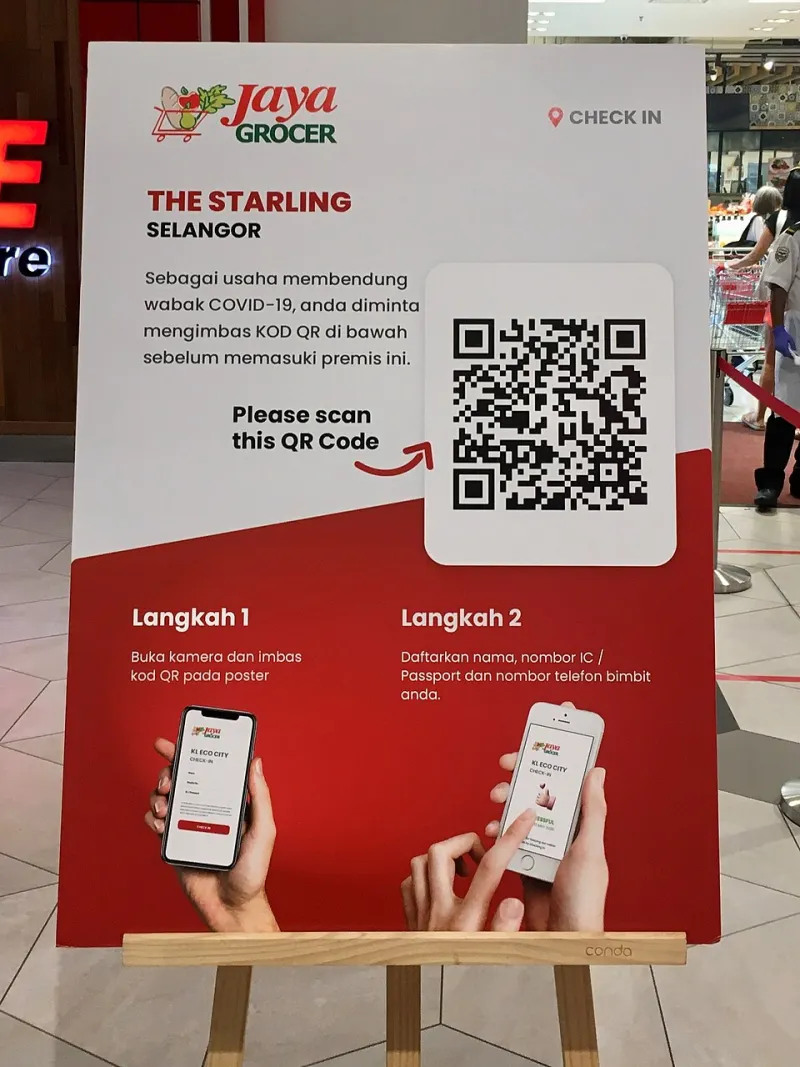
Photo: Slleong, CC0, via Wikimedia Commons
A QR code is, functionally, a URL printed in a form that humans cannot read. That is its convenience and, equally, its weakness. A payment code on a car park meter and a fraudulent replacement pasted over the top can look identical to anyone without a scanner, a steady hand and a moment of patience. Over the past few years, Australian regulators and scam reporting bodies have repeatedly flagged payment redirection as a growing category of loss, and QR codes have become one of its more efficient delivery mechanisms.
How a redirection scam actually works
The mechanics are simple enough that they rarely involve sophisticated intrusion. A fraudster produces a sticker bearing a payment QR code linked to an account they control, then places it over the genuine code on a sign, a meter, a menu or a counter display. In other variants, a fake invoice is emailed or posted with a QR code that leads to a cloned payment page, complete with a familiar logo and a plausible payee name.
The victim scans, lands on a payment page, enters an amount and pays. The money moves instantly and, once it has settled into a receiving account, recovery becomes difficult. Crucially, nothing about the transaction looks obviously wrong at the moment it happens, which is precisely why the scam works.
Redirection attacks are particularly effective against invoices because the amounts are expected, the timing is unremarkable, and the payee name is often close enough to the real one to pass a casual glance. Small businesses that settle supplier accounts by scanning a code attached to a document are a common target.
Why the code itself is a weak point
With a physical payment terminal, the customer is dealing with a device supplied by a financial institution. With a card number, the customer is reading digits they chose to memorise or store. A QR code, by contrast, is an unreadable pointer to an unknown destination, printed on a surface anyone can access after hours.
The compensating control is the confirmation screen. Before a payment is authorised, the customer's app or banking platform should display the payee name, the amount and the identifier to which funds will be sent. That screen exists to be read. In practice, habitual users treat it as a formality, and habit is exactly what a redirection scam relies upon.
What to check before you tap
- Compare the displayed payee name against the business you believe you are paying. A payee named after an individual, or a company name unrelated to the venue, warrants a pause.
- Be sceptical of a QR code that is a sticker sitting on top of an existing sign. Lifting edges, mismatched sizing and a code positioned at an odd angle are all worth noticing.
- Where a code resolves to a generic payment page with no business name, stop.
- Never rely on a QR code received by email or embedded in a PDF for a substantial invoice. Verify the account details through a phone number you sourced independently, not one printed in the same document.
- Ask counter staff to confirm the code belongs to the venue, particularly at pop-up stalls, markets and temporary setups.
Habits that travel well
A few practices meaningfully reduce exposure without abandoning QR payments, which remain a genuinely useful tool for small venues that cannot justify a full terminal fleet.
Pay small amounts first. For any new payee reached by code, a nominal test transaction is a reasonable formality before a larger sum.
Enable transaction notifications through your bank so an unexpected debit is visible within seconds rather than at month end.
Keep a record of what you paid and where the code was located. If a dispute arises, a photograph of the signage, the location and the time is worth a great deal.
Finally, treat a QR code on an invoice the way you would treat unexpected payment instructions arriving by text message. If the payee details differ from those used on previous invoices, that change is itself a signal.
What venues and merchants should be doing
Businesses that display codes at the point of payment carry an obligation that is partly commercial and partly civic. Practical measures include fixing signage behind counter glass where possible, using tamper-evident labels, checking outdoor signage at the start of each trading day, and printing the trading name prominently alongside the code so a customer can see what they ought to be paying.
Larger operators can go further by generating dynamic codes at the point of sale, where the code is produced for a specific transaction and expires quickly, rather than a static sticker that can be photographed and reproduced. Where a business uses a static code, it should at minimum audit it weekly.
If a payment has already gone wrong
Speed is the determining factor. Contact your financial institution immediately, report the transaction as unauthorised or fraudulent, and provide any photographs or receipts. Report the incident to the National Anti-Scam Centre through Scamwatch, and alert the venue so the tampered signage can be removed before another customer is caught.
QR payments are not the problem. An unreadable destination combined with a customer base trained to tap without looking is the problem, and both halves of that equation can be fixed.