The Checkout Gap: How Payment Friction Is Quietly Bleeding Australian Retailers Dry
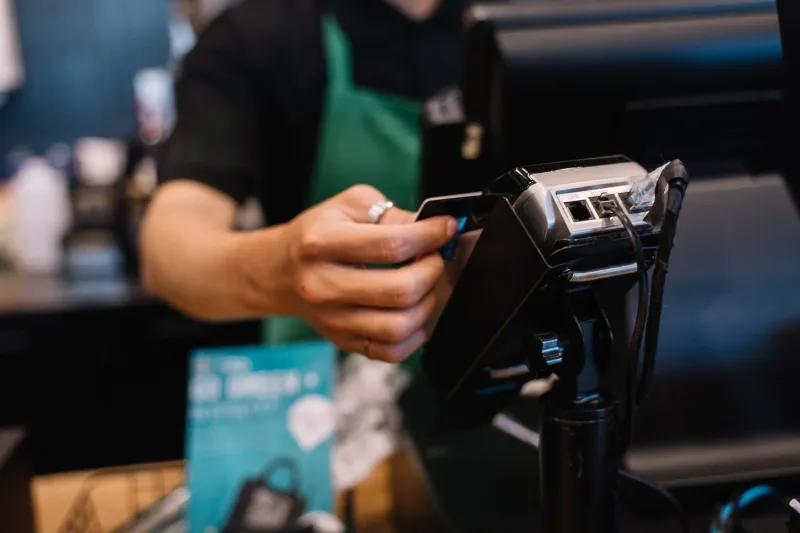
Ask any experienced retailer what their busiest hour looks like, and they will describe a carefully choreographed series of small transactions, each one dependent on the last completing cleanly. Now ask them what happens when the payment terminal freezes, the card reader loses connectivity, or the queue-busting tablet app crashes mid-order. The answer is rarely printable in a family publication.
Payment friction — the delays, failures, and inefficiencies that occur at the point of sale — is one of the most underestimated cost centres in Australian retail and hospitality. It does not appear on a profit and loss statement as a line item. It manifests instead as abandoned carts, shortened queues, frustrated customers who do not return, and staff overtime spent reconciling mismatched transactions at close of business.
The aggregate cost is substantial. And for many small and medium-sized businesses, it is entirely avoidable.
Defining the Problem: What Payment Friction Actually Means
Friction in payment systems takes several forms. At the most visible end, there are outright failures: terminals that decline valid cards, systems that time out during high-traffic periods, or digital payment integrations that fail to communicate correctly with inventory or accounting software.
Less visible but equally damaging are the micro-delays — the extra three seconds a customer waits while a contactless reader initialises, the additional step required to enter a PIN on a transaction that should have processed via tap, or the manual surcharge calculation that holds up a queue of five people behind a single uncertain customer.
In isolation, these moments seem trivial. Across hundreds of daily transactions, they accumulate into something that has a name in retail analytics: conversion leakage.
The Numbers Behind the Friction
Global research consistently demonstrates that checkout experience is a primary driver of consumer loyalty and return visits. A 2023 study by the Australian Retailers Association found that one in three Australian consumers reported abandoning a purchase in the past year due to a frustrating checkout experience, with payment issues cited as the most common trigger.
For e-commerce operators, the figures are starker still. Cart abandonment rates in Australia hover between 65 and 75 per cent across most categories, and while not all of that is attributable to payment friction, research from payment analytics firms consistently identifies checkout complexity — too many steps, unfamiliar payment options, unclear surcharge disclosure — as a top-three driver of abandonment.
Translate those percentages into dollars. A small online retailer processing 200 orders per week at an average order value of $85 loses approximately $11,000 to $14,000 in weekly revenue to cart abandonment. Even recovering 10 per cent of that through a smoother checkout experience represents a meaningful improvement to the bottom line.
Stories from the Shop Floor
In Melbourne's inner north, a café owner who has operated a busy brunch venue for six years describes the Saturday morning payment crisis as a recurring operational nightmare. "We had three terminals from two different providers, and they would not always talk to each other. One would go down, the queue would back up, and people would just leave. You could see them make the decision in real time."
After switching to an integrated payment platform that consolidated all terminals under a single system with real-time settlement visibility, the operator reported a measurable increase in table turnover during peak periods — not because service became faster in any other way, but because the payment step, previously the bottleneck, was resolved in under five seconds consistently.
A Sydney-based independent fashion retailer tells a similar story from the e-commerce side. "We were losing customers at the payment page because we only offered two options. Once we added digital wallet support and a BNPL option, our conversion rate went up by almost 18 per cent in the first month."
These are not isolated anecdotes. They reflect a pattern documented across Australian small business forums, retail industry surveys, and merchant feedback collected by payment processors themselves.
The Hidden Costs Beyond Lost Sales
Revenue leakage from abandoned transactions is the most obvious cost of payment friction, but it is not the only one. Consider the operational overhead generated by payment failures:
Reconciliation time. When transactions fail, time out, or process incorrectly, staff must manually investigate discrepancies. For a small hospitality business processing 300 to 500 transactions daily, even a 1 per cent error rate generates three to five problem transactions requiring investigation. At 10 minutes per resolution, that is up to 50 minutes of management time every day — time that could be directed toward service delivery or business development.
Chargeback exposure. Payment processing failures that result in double-charges or delayed reversals generate chargebacks, which carry administrative fees and can affect a merchant's payment processing rates over time.
Brand damage. In an environment where Google reviews and social media feedback are primary drivers of new customer acquisition, a poor checkout experience is increasingly likely to generate a public complaint. The reputational cost of a single viral negative review about a payment failure can exceed the transaction value many times over.
What Better Infrastructure Actually Delivers
The evidence from businesses that have invested in modernised payment infrastructure is consistent: the return on investment is real and measurable, and it typically manifests faster than operators anticipate.
Key improvements reported by Australian retailers who have upgraded payment systems include reduced queue times at peak periods, higher average transaction values (attributed to the friction-free nature of tap and digital wallet payments encouraging impulse additions), lower staff overhead for reconciliation, and higher rates of repeat visitation from customers who associate the venue with a smooth overall experience.
For hospitality venues in particular, the ability to accept split payments cleanly — across multiple cards or between digital wallets — has become a genuine competitive differentiator. As group dining and social spending recover to and exceed pre-pandemic levels, the table that can settle a bill for eight people in two minutes has an advantage over one that requires a manual calculation and three separate card swipes.
The Strategic Case for Payment as Infrastructure
Australian business owners are accustomed to thinking of payment processing as a utility — a necessary cost with limited strategic relevance. The evidence suggests this framing is outdated.
Payment infrastructure, when implemented thoughtfully, is a direct contributor to revenue, customer retention, and operational efficiency. The businesses that are beginning to treat checkout experience as a design problem — worthy of the same attention as store layout, menu engineering, or digital marketing — are consistently outperforming those that treat it as an afterthought.
The checkout gap is real. For Australian retailers willing to examine it honestly, closing it is one of the most accessible improvements available.